
Gifted Programs
Introduction
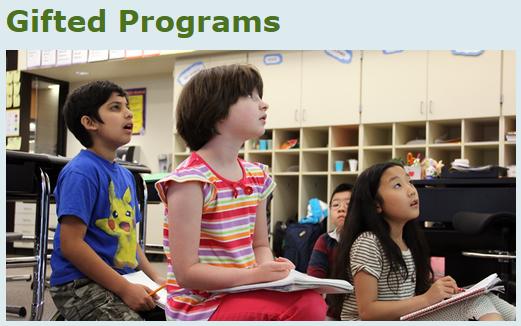
The Gifted Program is designed for students who demonstrate outstanding levels of aptitude through cognitive and academic testing and superior academic performance. Gifted students typically view the world in non-traditional ways; they are divergent thinkers who approach tasks in a more abstract and complex manner. In the gifted classroom, learning moves beyond the knowledge and procedural levels and students gain a more conceptual understanding of subject matter. Curriculum and instruction are provided at one or more years beyond grade level.
What it is
Gifted programs are specialized services, not just harder classes.
They are designed for students whose:
- Cognitive development is significantly above grade level
- Learning style is qualitatively different, not just faster
Key Features
- Accelerated curriculum (often 1–2+ years ahead)
- Heavy emphasis on:
- Abstract reasoning
- Critical & creative thinking
- Problem solving
- Interdisciplinary learning
- Less repetition, more inquiry
- Explicit attention to:
- Perfectionism
- Intensity
- Peer belonging
Who it’s for
Students who:
- Learn very quickly
- Think deeply and abstractly
- Become bored or disengaged without challenge
- Need intellectual peers to thrive
Gifted ≠ high grades only
Big Picture
| Aspect | Gifted Program |
|---|---|
| Purpose | Meet unique cognitive needs |
| Focus | How students think & learn |
| Subjects | All core subjects |
| Identification | Formal testing + criteria |
| Pace | Faster and deeper |
| Depth | Very deep, conceptual |
| Peer Grouping | With intellectual peers |
| Social-Emotional Support | Explicitly included |
Development of Higher-Order Thinking
Gifted programs emphasize:
- Critical thinking
- Abstract reasoning
- Creative and divergent thinking
- Problem solving and inquiry
Students are expected to:
- Explain reasoning
- Make connections across subjects
- Tackle complex, open-ended problems
Nurturing Potential (Not Just Current Performance)
These programs aim to:
- Cultivate long-term academic and creative potential
- Build independence, resilience, and self-advocacy
- Encourage intellectual risk-taking
The Gifted Program Curriculum Goal
The curriculum framework is organized around three broad goals: the application of cognitive, affective, and independent skills. It includes the following areas:
- Creative thinking focuses on fluency, flexibility, elaboration, and originality, coupled with affective characteristics associated with creativity, such as curiosity and risk-taking.
- Critical thinking is the intellectually disciplined process of actively and skillfully conceptualizing, applying, analyzing, synthesizing, and evaluating information to reach an answer or conclusion. It involves reasonable, reflective thinking focused on deciding what to believe or do.
- Inductive and deductive reasoning skills, such as analysis, evaluation, and prediction.
- Problem-solving skills, using a mathematical heuristic to outline the process.
- Affective skills of personal organization
- Interpersonal and intrapersonal skills
Creative Thinking Strategies
- Solicit many diverse thoughts about issues and ideas.
- Engage students in the exploration of diverse points of view to reframe ideas.
- Encourage students to demonstrate open-mindedness and tolerance of imaginative, sometimes playful solutions to problems.
- Provide opportunities for students to develop and elaborate on their ideas.
Critical Thinking Strategies
- Encourage students to judge or evaluate situations, problems, or issues.
- Engage students in comparing and contrasting ideas.
- Provide opportunities for students to generalize from concrete data.
- Encourage student synthesis or summary of information within or across disciplines.
Problem-Solving and Research Strategies
- Employ brainstorming techniques.
- Engage students in problem identification and definition.
- Engage students in solution-finding activities and comprehensive solution articulation.
- Require students to gather evidence from multiple sources through research-based techniques (e.g., print, non-print, internet, self-investigation via surveys, interviews, etc.).
- Provide opportunities for students to analyze data and represent it in appropriate charts, graphs, or tables.
- Ask questions to assist students in making inferences from data and drawing conclusions.
- Encourage students to determine implications and consequences of findings.
- Provide time for students to communicate research study findings to relevant audiences in a formal report and/or presentation.
Inductive & Deductive Reasoning
- Inductive reasoning is the process of arriving at a general conclusion based on observations of specific examples.
“By investigating a sequence of related problems over several days, students observe patterns, make conjectures, explore further examples to test the conjectures, formulate theorems, write up proofs, polish the arguments, and investigate generalizations.” - Deductive reasoning is the process of proving a specific conclusion from one or more general statements.
A conclusion that is proved to be true by deductive reasoning is called a theorem.
Gifted education is about who students can become, not just what they already know.
“天才班”课程(Gifted Programs)
课程简介
“天才班”课程专为在认知能力测评、学业能力测评及学业表现中展现出卓越潜能的学生而设计。这些学生通常以不同于常规的方式看待世界,具有发散性思维,并能以更加抽象和复杂的方式处理任务。在“天才班”课堂中,学习超越了知识掌握和程序性操作的层面,帮助学生从概念层面深入理解学科内容。课程内容和教学通常超前于学生所在年级一个或多个学年。
一、什么是“天才班”课程
“天才班”课程是一种专门化的教育服务,而不仅仅是“更难的课程”。
这些课程专为以下学生设计:
- 其认知发展水平显著高于年级水平
- 其学习方式在本质上不同,而不仅仅是学习速度更快
二、主要特点
课程加速
- 课程内容通常比年级水平提前 1–2 年或更多
重点强调以下能力:
- 抽象推理
- 批判性与创造性思维
- 问题解决能力
- 跨学科学习
教学方式特点:
- 减少重复性练习
- 增加探究式学习
明确关注学生的社会情感需求:
- 完美主义倾向
- 情绪与思维强度
- 与同伴的归属感
三、适合哪些学生
“天才班”课程适合以下学生:
- 学习新知识非常快
- 思维深刻且具有高度抽象性
- 在缺乏挑战的环境中容易感到无聊或失去学习动力
- 需要与智力水平相当的同伴一起学习,才能充分发展潜能
“天才班”学生 ≠ 仅仅成绩好
四、整体框架(Big Picture)
| 方面 | “天才班”课程 |
|---|---|
| 目标 | 满足学生独特的认知需求 |
| 关注重点 | 学生如何思考与学习 |
| 学科范围 | 所有核心学科 |
| 识别方式 | 正式测评 + 综合标准 |
| 学习节奏 | 更快且更深入 |
| 学习深度 | 高度概念化、深入 |
| 同伴分组 | 与智力同伴一起 |
| 社会情感支持 | 明确纳入课程设计 |
五、高阶思维能力的发展
“天才班”课程特别强调:
- 批判性思维
- 抽象推理
- 创造性与发散性思维
- 问题解决与探究能力
学生通常需要:
- 清楚地解释自己的思考过程
- 在不同学科之间建立联系
- 解决复杂、开放性的问题
六、培养潜能(不仅是当前成绩)
“天才班”课程的目标不仅是当下表现,更包括:
- 培养学生长期的学术与创造性潜能
- 建立独立性、抗挫力与自我倡导能力
- 鼓励学生进行智力层面的冒险与探索
七、“天才班”课程目标
课程框架围绕三大目标展开:认知技能、情感技能及独立学习技能的运用,具体包括以下方面:
- 创造性思维:重点培养思维的流畅性、灵活性、精细化和独创性,同时培养与创造力相关的情感特质,如好奇心和勇于尝试的精神。
- 批判性思维:通过严谨的思维过程,主动而熟练地对信息进行概念化、应用、分析、综合和评价,从而得出答案或结论。它强调理性和反思,帮助学生判断应当相信什么或采取何种行动。
- 归纳推理与演绎推理:培养分析、评价和预测等能力。
- 问题解决能力:运用数学启发式策略梳理问题解决的过程。
- 个人组织与自我管理方面的情感技能。
- 人际交往与自我认知技能。
八、创造性思维培养策略
- 鼓励学生围绕问题和观点提出多种不同的想法。
- 引导学生探索不同的观点,从新的角度重新审视原有想法。
- 鼓励学生保持开放的心态,包容富有想象力、甚至带有趣味性的问题解决方案。
- 为学生提供发展、完善和深入阐述自己想法的机会。
九、批判性思维培养策略
- 鼓励学生对情境、问题或议题进行判断和评价。
- 引导学生比较不同观点,分析其异同。
- 为学生提供从具体数据中归纳一般规律的机会。
- 鼓励学生对学科内部或跨学科的信息进行综合与总结。
十、问题解决与研究策略
- 运用头脑风暴方法。
- 引导学生识别并明确界定问题。
- 组织学生开展寻找解决方案的活动,并完整、清晰地阐述解决方案。
- 要求学生运用研究方法,从多个来源收集证据,例如印刷资料、非印刷资料、互联网,以及通过问卷调查和访谈开展自主调查等。
- 为学生提供分析数据并使用适当的图表或表格呈现数据的机会。
- 通过提问帮助学生根据数据作出推断并得出结论。
- 鼓励学生分析研究发现的意义及其可能产生的影响和后果。
- 安排时间,让学生通过正式研究报告和/或展示向相关受众传达研究成果。
十一、归纳推理与演绎推理
- 归纳推理是通过观察具体实例得出一般性结论的过程。
“通过连续数天探究一系列相互关联的问题,学生观察规律、提出猜想、探索更多实例以检验猜想、形成定理、撰写证明、完善论证,并进一步探究一般化的结论。”
- 演绎推理是从一个或多个一般性陈述出发,证明某一具体结论的过程。
通过演绎推理证明为真的结论称为定理。
“天才班”教育关注的是学生“将来能成为什么样的人”,而不仅是他们“现在知道什么”。